

 I’m fascinated by psychology and trauma, and particularly by what recovery from trauma actually looks like. It’s something that finds its way into all of my books in different forms.
In The Jealous Girl, one of the things I wanted to explore was coercive control — not necessarily the behaviour that is immediately recognisable as controlling, but the quieter, more insidious kind that gradually chips away at someone’s sense of self.
Someone constantly putting you down, undermining your confidence or making decisions for you can sometimes disguise that behaviour as care. I’m only saying this because I love you. I’m trying to protect you. I know what’s best for you.
And when it comes from somebody you love, trust and rely upon, recognising it for what it is can be incredibly difficult.
That’s particularly true for Kirsty. Her relationship with Ryan feels normal to her. In fact, measured against what she’s experienced before, it feels better. Her point of reference for what a healthy relationship looks like has already been distorted.
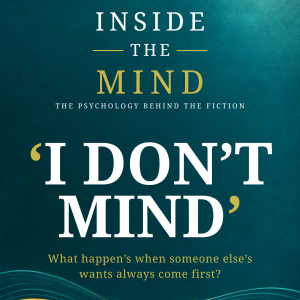
There’s a concept associated with this kind of dynamic that particularly interested me when I was writing Kirsty: subjugation.
Imagine somebody asking you a seemingly simple question: What would you like to eat?
You might think the answer should be easy.
But what if you’ve spent years learning that keeping the peace — and sometimes keeping yourself safe — depends upon anticipating somebody else’s needs?
You know what they want to eat. What they’ll want to drink. Where they’ll want to go. What mood they’re in. What answer will please them. You become extraordinarily good at reading another person because you’ve had to be.
And somewhere along the way, you’ve stopped asking yourself what you want.
That was something I really wanted to explore through Kirsty. From the outside, it can be difficult to understand why somebody doesn’t recognise what is happening to them or simply make a different choice. But if your sense of what you need and want has been gradually worn away — particularly if that process began when you were young — the abnormal can become your normal.
For Kirsty, part of the journey isn’t simply recognising what other people have done to her. It’s beginning to discover who she is when somebody else isn’t defining her.
And, for me, that’s where the psychology becomes really interesting — not just in the trauma itself, but in what it takes to find your way back from it.
Leave a Reply